A ceiling that’s cracked, water-stained, or covered in dated popcorn texture drags down a whole room, even when everything else looks good. A full drywall tear-out is expensive and messy enough that most people in Thailand put it off for years. You don’t need to go that far. This guide covers five ways to get a fast ceiling upgrade, from a weekend paint job to a professional stretch ceiling install, with real costs and install times for each.
Why the ceiling is worth fixing first
The ceiling is sometimes called the fifth wall, and it has an outsized effect on how a room feels. A stained or cracked one makes a space look neglected no matter how well everything else is kept. A clean, modern one makes the same room feel larger and brighter.
Every option below gets compared on four things:
- Speed: how long installation takes
- Cost: typical budget in Thai Baht
- Mess: how much dust and disruption is involved
- Aesthetic impact: how much it actually changes the room’s look
Check your starting point
Before picking an option, look at what you’re actually dealing with. Popcorn texture, water stains, small cracks, and dated designs are common, and most of the cover-up options below work fine over these as long as the ceiling underneath isn’t sagging or crumbling. Measure the room to get your square metreage. Budgets vary a lot by material. Paint, tiles and planks sit roughly between ฿800 and ฿2,500 per square metre, while a stretch ceiling starts from about ฿3,000.
DIY or professional
Some options here, like foam tiles or peel-and-stick planks, are straightforward for a confident DIYer. A suspended ceiling or a stretch ceiling is a different story. Getting a flawless finish takes the right tools and real experience, and a professional install usually comes with a warranty a DIY job won’t have.
Paint and peel-and-stick finishes
If your ceiling is in reasonable shape, no major cracks, no water damage, no heavy texture, paint or a peel-and-stick finish gets you the most change for the least money and time. Both are cosmetic fixes. Neither one hides serious structural problems underneath.
Painting
A ceiling doesn’t have to be plain white. A different colour or finish changes how a room reads. Two finishes work well on ceilings:
- Flat or matte: hides minor imperfections best, the standard choice for most ceilings
- Eggshell or satin: slightly more durable and easier to wipe down, useful in kitchens and bathrooms
Clean the surface first and tape off the edges for a sharp line. A standard room usually runs ฿800 to ฿1,500 in materials, plus ฿500 to ฿1,000 a day in labour if you’re not doing it yourself.
Peel-and-stick tiles and wallpaper
These add pattern or texture fast, without any plaster work. They work best on a ceiling that’s already smooth and flat, since bumps show through the material. Rolls typically start around ฿200 to ฿500 in Thailand. The trade-offs: seams can be visible up close, and the adhesive doesn’t always hold as well in humid rooms as traditional wallpaper paste.
Planks and tiles
If the ceiling has more going on, stubborn stains, real texture, visible cracks, covering it entirely is often the more practical fix. Planks and tiles hide flaws completely and add real texture to a room, and both are within reach of a determined DIYer over a weekend.
Ceiling planks
Planks range from wood-look finishes for a warmer feel to plain white PVC for something cleaner. Most click together with a tongue-and-groove edge and fasten directly to the ceiling joists, so you’ll need to find those first. PVC planks in Thailand typically run ฿150 to ฿400 per square metre.
Ceiling tiles
Two installation types, depending on what you need:
- Glue-up tiles: light PVC or polystyrene tiles glued straight to a clean, flat ceiling. Good for bedrooms and living rooms. Usually ฿80 to ฿250 per tile depending on design.
- Drop ceiling tiles: a suspended grid holds tiles below the original ceiling, leaving room to access wiring or plumbing. More common in basements and home theatres than living spaces.
Stretch ceiling systems
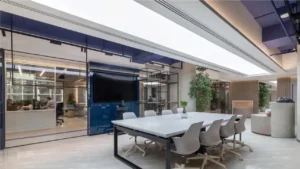
A stretch ceiling is a membrane stretched across a track fixed just below your existing ceiling. It hides cracks, stains, and uneven plaster completely, with no demolition, no sanding dust, and no paint fumes. It’s also the fastest ceiling upgrade on this list, and typically the most expensive.
How it’s installed
A track goes up around the room’s perimeter first. The membrane is then heated to make it flexible, stretched into the track, and left to cool into a taut, smooth surface. Your existing ceiling stays untouched underneath. Most systems come with a warranty of 10 years or more.
Design options
- Finishes: high-gloss, matte, satin, or a custom print
- Lighting: recessed spotlights, pendants, or hidden LED strips built into the membrane
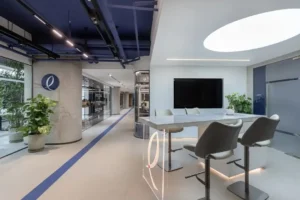
- Shapes: multi-level designs, curves, arches, and backlit translucent panels
Where it makes the most sense
A stretch ceiling is the strongest choice when the existing ceiling is genuinely damaged or uneven, when you want a flawless high-gloss or matte finish, or when the room is humid. Bathrooms, kitchens, basements, and pool areas benefit from a material that resists moisture well and won’t warp or grow mould with normal ventilation. See what a stretch ceiling could look like in your space.
Comparing the five options
At a glance
| Upgrade Option | Avg. Time | Cost | Mess Level | Skill Needed | Best For |
|---|---|---|---|---|---|
| Paint | 1-2 Days | ฿ | Medium | DIY Friendly | Budget refreshes on smooth surfaces. |
| Surface Mount Tiles | 1 Day | ฿-฿฿ | Low | DIY Friendly | Hiding minor cracks and imperfections. |
| Wood/PVC Planks | 2-3 Days | ฿฿ | Medium | Intermediate | Adding warmth and character. |
| Drop Ceiling | 1-2 Days | ฿฿ | Low-Medium | Intermediate | Easy access to pipes and wiring. |
| Stretch Ceiling | 4-8 Hours | ฿฿฿ | Very Low | Pro Install | A flawless, modern finish, speed, and moisture resistance. |
What we’d pick by room
- Living room: wood-style planks for warmth, or a matte or satin stretch ceiling for a cleaner, higher-end look.
- Basement or ground floor: a drop ceiling if you need access to utilities, a stretch ceiling if you want something moisture-resistant long term.
- Bathroom or kitchen: PVC planks or a stretch ceiling, both hold up well against humidity.
- Bedroom: paint for a simple refresh, or a stretch ceiling with integrated LED backlighting for something closer to a hotel finish.
The bottom line
None of these five options is wrong. The right one depends on how much your current ceiling is holding you back, your budget, and how much disruption you’re willing to deal with. Paint and peel-and-stick fix cosmetic issues fast and cheap. Planks and tiles cover more serious flaws with real texture. A stretch ceiling covers everything at once and adds a finish none of the others can match, at a higher cost. Get a quote for a stretch ceiling in your space.
Frequently asked questions
What’s the cheapest way to upgrade a ceiling?
Paint. A quality anti-mould ceiling paint runs about ฿800 to ฿1,500 in materials for a standard room in Thailand, plus ฿500 to ฿1,000 a day in labour if you hire it out. It won’t fix structural issues, but it covers minor stains and dullness for very little money.
Can I cover a popcorn ceiling without scraping it?
Yes. PVC tiles, beadboard panels, and stretch ceilings all install directly over the existing texture. A stretch ceiling is usually the cleanest of the three, since it goes up with minimal dust and hides pipes and wiring at the same time.
Does a ceiling upgrade affect resale value?
It can help. A clean, modern ceiling makes a space read as larger and better maintained, which matters to buyers doing a walkthrough. It won’t single-handedly raise your asking price, but a stained or cracked ceiling is the kind of thing buyers notice and use to negotiate down.
How long does a stretch ceiling take to install?
For a typical room in a Thai condo or house, around 20 to 30 square metres, a professional crew usually finishes in a single day, often just a few hours. That covers the perimeter track, heating, and stretching the membrane into place.
Can I add lighting to these ceiling options?
Yes, particularly with stretch ceilings and drop ceiling tiles. Recessed spotlights, LED strips, and pendant fixtures can all be built in without cutting into the original structural ceiling.
How do I make a low ceiling feel higher?
Light and reflection do most of the work. A white or light-coloured ceiling, especially a few shades lighter than the walls, lifts the space visually. A glossy or satin stretch ceiling goes further, since the reflective surface bounces light around the room.