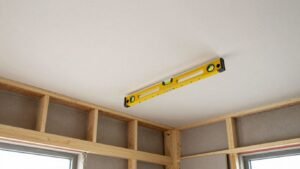
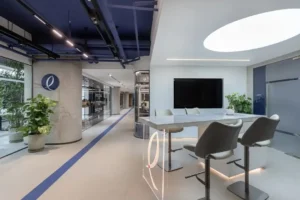
Choose a stretch ceiling contractor by checking their relevant work, proposed system and written scope. A low square-metre rate or a long warranty headline does not tell you whether the quotation covers the installation your project needs.
Use this checklist to compare contractors for a home, condo, restaurant, shop or office in Thailand. Ask for specific answers and documents rather than accepting general assurances about quality.
1. Check experience with comparable projects
Ask to see completed work similar to your room size, finish and use. A company experienced in plain residential ceilings may need to demonstrate different skills for a large illuminated retail surface or an acoustic restaurant ceiling.
- Look for photographs showing the finished details, corners and fittings.
- Ask what the contractor supplied and installed on each example.
- Request a client reference or project visit where available.
- Check whether the proposed team has experience with the specified system.
Review Beetlewings’ project portfolio and ask which examples are relevant to your brief.
2. Identify the exact product
The quotation should name the membrane brand or product reference, material, colour and finish. Ask for a sample where appearance matters. For printed work, agree artwork preparation and approval before production.
For an acoustic system, ask which membrane and backing are proposed and what supporting test information applies. For backlighting, request the lighting specification rather than just the word LED.
3. Request product certificates
Ask for certificates and technical documents for the exact products proposed. Check that product references match the quotation and that the documents address the performance you need. Do not assume every professional installer automatically supplies certified products.
Fire classification, acoustic performance and emissions documentation serve different purposes. Where the building has specific requirements, have the responsible designer or professional check the proposed assembly.
4. Require a site assessment and installation plan
The contractor should assess the room, fixing substrate, services, moisture conditions, working height and access. They should identify preparation needed before installation, including unresolved leaks or unsafe existing components.
Ask how the selected system will be installed and how the room will be protected. In condos or occupied businesses, confirm permissions, working hours and arrangements for deliveries or equipment.
5. Define responsibility for lighting and services
Identify who provides and installs the lights, drivers, wiring, supports and controls. Agree the position of air-conditioning outlets, sprinklers and any other services before the membrane is made.
Ask how lighting components will be accessed and replaced after installation. A clean-looking finished ceiling is not enough if routine maintenance requires unplanned dismantling.
See the design and lighting options when developing the brief.
6. Compare itemised quotations
| Quote item | What should be stated |
|---|---|
| Area and product | Measured area, membrane reference, finish and colour |
| Installation | Profiles, fixings, supports, labour and preparation |
| Lighting and electrics | Products, quantities, controls and responsibilities |
| Access and protection | Equipment, working hours and room protection |
| Exclusions | Any removal, repairs, disposal or service changes not included |
| Commercial terms | Total price, VAT treatment, payment stages and validity |
Compare quotations for the same scope. Ask for clarification where one includes a component and another excludes it. Do not treat an advertised starting rate as the final project price.
7. Read material and workmanship warranties separately
Ask who provides each warranty, how long it lasts and how a claim is made. Check exclusions for accidental damage, leaks, electrical faults and unauthorised modifications. Establish whether access, removal, refitting or travel costs are covered.
Keep the product details, invoice and handover documents. A warranty should provide a workable process for assistance, not only a headline duration.
8. Agree payment stages and handover
Confirm the payment schedule, production or order commitments and how changes will be approved. Record the intended installation programme and how delays or additional work will be handled.
At handover, check the finish, perimeter details and fittings against the agreed scope. Test lights and controls with the responsible installer. Request care instructions, product references, warranties and a clear aftercare contact.
Questions you can copy into an enquiry
- Can you show comparable completed projects and a reference?
- Which exact membrane and fixing system are you proposing?
- Can you provide the relevant product certificates?
- What does the total price include, and is VAT included?
- Who is responsible for electrical work and lighting supports?
- How will I access drivers, pipes or services after installation?
- What do the material and workmanship warranties cover?
- What will I receive at handover, and who handles aftercare?
Warning signs worth resolving before paying
Be cautious if the product cannot be identified, exclusions remain vague, certificates do not match the specified material or responsibility for electrical work is unclear. A contractor should be willing to answer practical questions and put the scope in writing.
Frequently asked questions
Should I choose the lowest quotation?
Only after confirming that the quotations cover equivalent work. Compare scope, product, responsibilities and aftercare alongside price.
Do I need several quotations?
Comparing suitable contractors can help you understand the proposed scope. A detailed, relevant quotation is more useful than collecting many prices for different specifications.
Does a long warranty prove installation quality?
It does not replace references, product documentation or a clear installation plan. Read the coverage and claims procedure.
Send your room dimensions, location, photographs and preferred finish to Beetlewings for a project quotation. A site assessment can establish the specification and the work needed before you commit.